Navigating Sync Patterns Between Broadcast Table Sessions and Automated Reel Features in British Portable Gaming Environments
Klara Simon · Jul 3, 2026
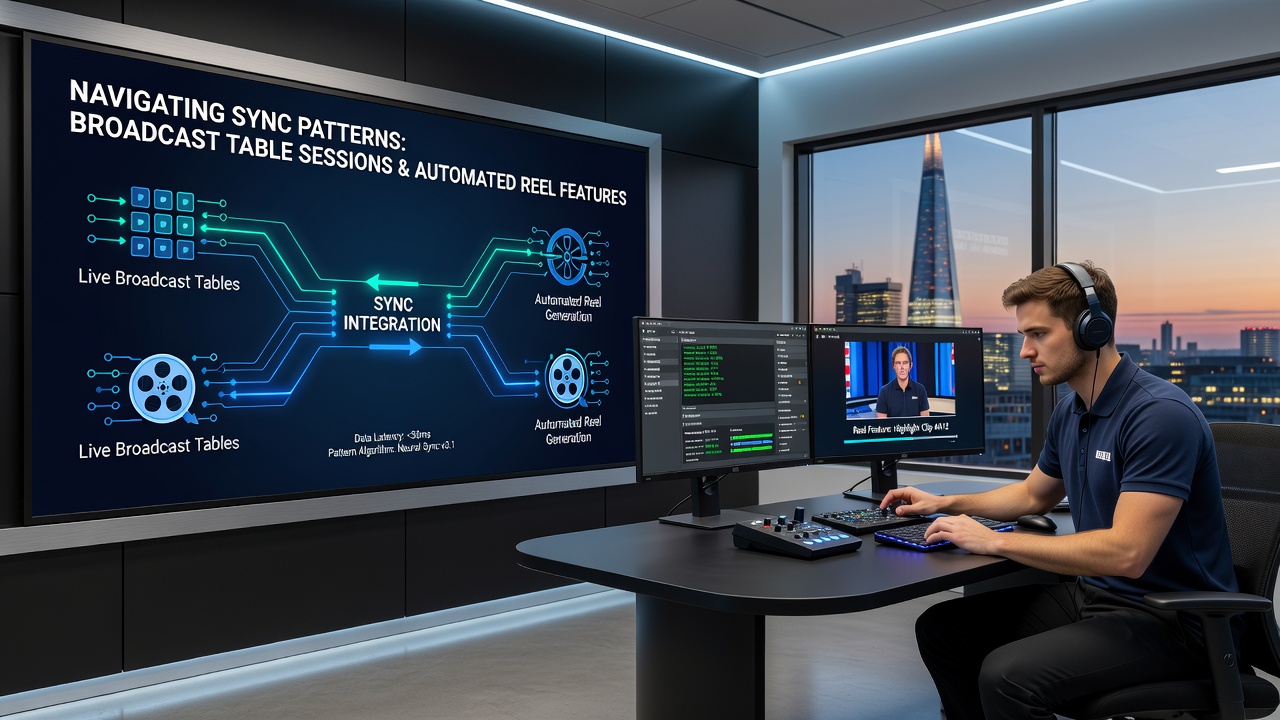
Navigating Sync Patterns Between Broadcast Table Sessions and Automated Reel Features in British Portable Gaming Environments
British portable gaming environments have developed intricate mechanisms that align live broadcast table sessions with automated reel features, creating coordinated experiences across mobile platforms. These sync patterns rely on real-time data exchanges between live dealer feeds and slot algorithms, allowing events from one format to influence outcomes or bonuses in the other. Operators deploy application programming interfaces that transmit timing signals from broadcast tables directly into reel mechanics, ensuring that a roulette spin completion can trigger reel adjustments within milliseconds.
Core Components of Synchronization Technology
Broadcast table sessions capture video from physical or virtual dealer setups and stream them through dedicated mobile applications, while automated reel features operate on random number generators that adjust based on incoming data packets. The alignment occurs through timestamp protocols where each table event receives a unique identifier that maps to reel sequences, maintaining consistency even during variable network conditions common in portable use. Data from the European Gaming and Betting Association indicates that such integrations have expanded across multiple jurisdictions since 2024, with British operators adopting similar frameworks to manage cross-format interactions.
Patterns Observed in July 2026 Deployments
By July 2026, several mobile platforms in Britain had implemented layered sync models that connect table session milestones to reel feature activations. These models use predictive buffering to anticipate latency spikes, which helps maintain continuity when users switch between live streams and automated spins on the same device. Observers note that the patterns often follow a sequence where table outcomes feed into reel multipliers, creating chained progressions that span both formats without requiring separate user inputs.
Handling Latency and Mobile Constraints
Portable environments introduce specific challenges due to fluctuating signal strengths and device processing limits. Sync patterns address this through adaptive algorithms that prioritize essential data packets, such as outcome confirmations from tables, over secondary reel animations. Research from the University of Nevada, Reno gaming technology studies shows that these adjustments reduce desync incidents by routing communications through regional edge servers, a method increasingly visible in British applications during 2026 updates.
Integration Examples Across Operators
One documented approach involves mapping roulette wheel segments to corresponding reel positions, allowing a broadcast result to pre-select symbols on automated games. Another pattern uses shared jackpot pools where table session contributions directly scale reel payout thresholds. These systems operate under standardized communication protocols that log every synchronization event for compliance verification, ensuring traceability from initial broadcast feed to final reel display on user devices.
Additional implementations include conditional triggers that activate only after multiple table sessions complete, building cumulative effects on reel volatility settings. Mobile applications monitor connection quality in real time and shift between full sync mode and simplified reel-only operation when necessary, preserving core functionality without full pattern disruption.
Future Considerations in Pattern Development
Developers continue refining these alignments through machine learning models trained on historical session data from British users. The models identify recurring intervals where table and reel activities overlap most effectively, then optimize signal routing accordingly. This process supports smoother transitions in environments where players move between formats rapidly on portable hardware.
Conclusion
Sync patterns between broadcast table sessions and automated reel features represent a technical evolution in British portable gaming that emphasizes coordinated data flows and responsive design. As these systems mature through 2026 and beyond, their reliance on precise timing protocols and adaptive handling of mobile variables continues to shape how operators deliver interconnected experiences across live and automated elements.