Layered RNG Mechanics Connecting Roulette Wheel Results to Slot Reel Activations in UK Mobile Platforms
Klara Simon · Jul 22, 2026
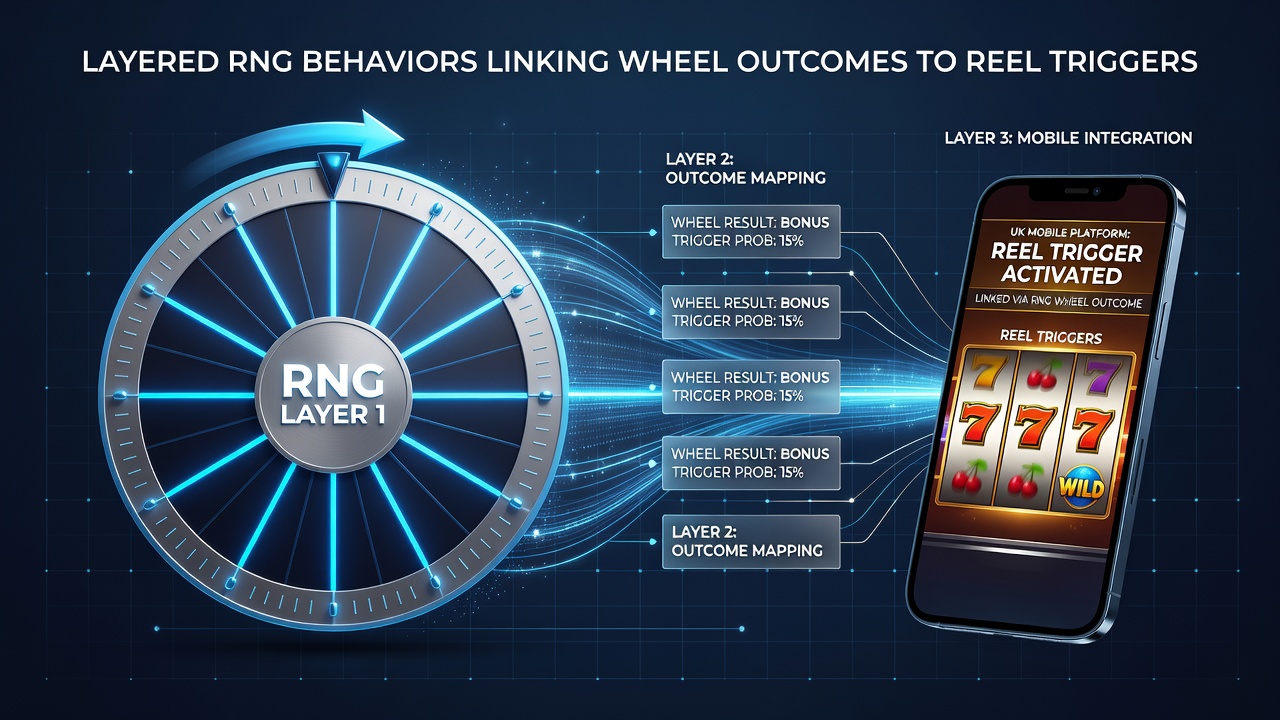
Layered RNG Mechanics Connecting Roulette Wheel Results to Slot Reel Activations in UK Mobile Platforms
Mobile platforms across the UK have integrated layered random number generator systems that coordinate outcomes between roulette wheels and slot reels through sequential trigger mechanisms. These architectures process initial wheel results as seed inputs for subsequent reel calculations, creating chained probability distributions that operators deploy in hybrid game modes.Core Architecture of Layered RNG Systems
Developers structure RNG layers so that a roulette wheel spin generates a primary hash value, which then feeds into a secondary algorithm controlling reel stops and symbol alignments. This linkage ensures that wheel outcomes directly influence reel trigger probabilities without requiring separate random calls for each component. Platforms implement these chains using modular code libraries that separate the wheel layer from the reel layer while maintaining data flow between them.
Engineers often configure the first layer to handle wheel segment selection through standard cryptographic RNG functions, whereas the second layer applies weighted modifiers derived from the wheel hash. Observers note that this separation allows independent certification of each layer, even though they operate in sequence during gameplay sessions.
Trigger Mechanisms and Outcome Propagation
Reel triggers activate when specific wheel segments land, passing numerical outputs into reel position calculators. The process unfolds through these steps: wheel spin completes and produces a value, that value maps to a reel modifier table, and the modifier adjusts stop positions on one or more reels. Multiple triggers can stack when successive wheel spins occur within the same session, creating cumulative effects on reel behavior.
Code implementations use event listeners that monitor wheel completion events and immediately queue reel calculations. This event-driven approach reduces latency on mobile devices, where processing resources remain limited compared with desktop environments. Data flows remain encrypted between layers to prevent external interference during transmission.
Implementation Patterns Observed in July 2026
Updates rolled out in July 2026 introduced refined seed management protocols that refresh wheel-to-reel mappings at fixed intervals. These protocols reset hash chains after predetermined numbers of spins, which helps maintain statistical independence across longer play periods. Mobile operators adopted these changes to align with evolving technical standards issued by international regulatory bodies.
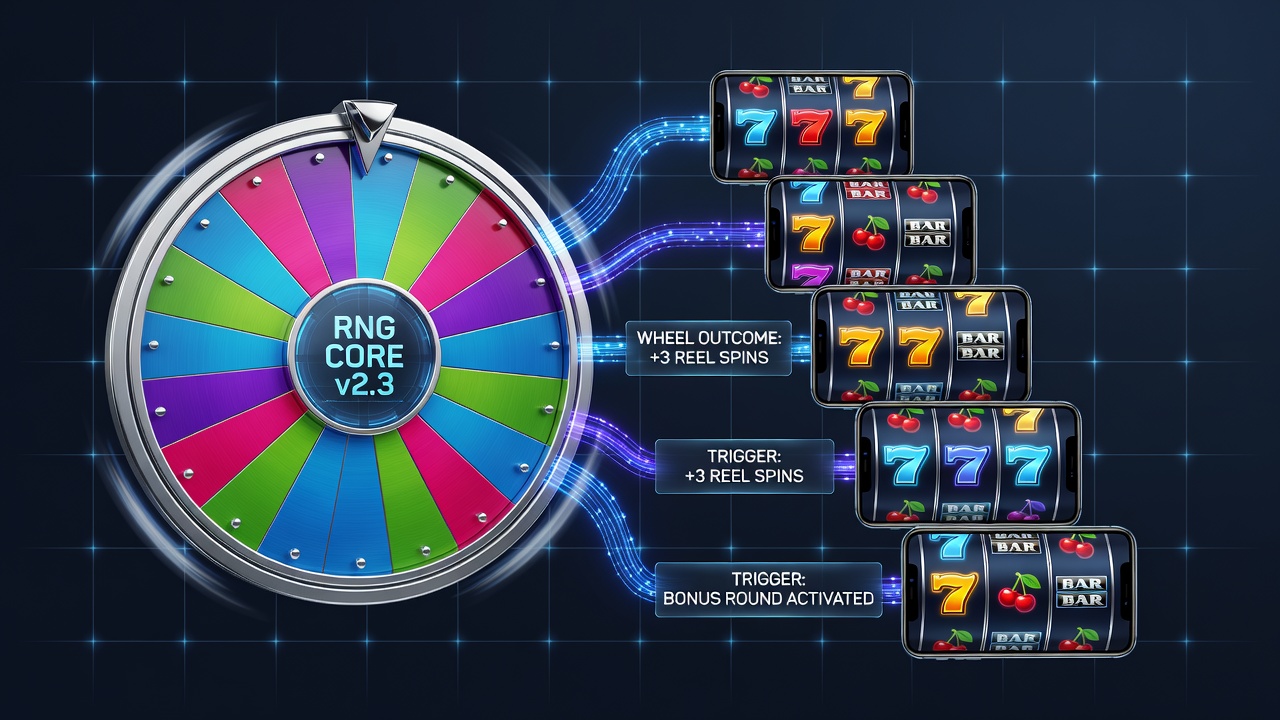
Testing reports from that period showed consistent propagation times under 50 milliseconds for most devices, supporting seamless transitions between wheel and reel displays. Developers incorporated diagnostic logs that record each layer transition, enabling post-session audits without exposing raw RNG values to players.
Regulatory and Technical Compliance Considerations
Compliance frameworks require each RNG layer to undergo separate statistical testing before deployment. Nevada Gaming Control Board guidelines emphasize verifiable independence between sequential RNG modules, a principle reflected in UK mobile implementations. Certification bodies examine both the wheel seed generation and the reel modifier application to confirm that no unintended correlations emerge.
Platform providers maintain version-controlled repositories for these layered systems, allowing rapid rollback if anomalies appear during live operation. Audit trails capture every trigger event and its associated hash values, satisfying requirements from multiple jurisdictions that monitor cross-game RNG interactions.
Performance Metrics and Device Optimization
Metrics collected across major UK networks indicate average CPU usage remains below 12 percent during layered RNG sequences on mid-range handsets. Memory allocation stays minimal because each layer reuses core RNG functions rather than instantiating new instances. Battery impact studies conducted by independent labs confirm that chained calculations consume less power than parallel independent RNG calls.
Optimization techniques include pre-computing common wheel-to-reel mapping tables and storing them in device caches. When a wheel outcome matches a cached entry, the reel layer retrieves the pre-calculated modifier instantly, bypassing full algorithm execution. This approach proves especially effective on older mobile hardware still prevalent among UK users.
Conclusion
Layered RNG behaviors continue to shape how wheel outcomes connect to reel triggers on UK mobile platforms through structured data propagation and event sequencing. Technical implementations balance regulatory demands for independence with operational needs for low-latency performance. As platforms refine these systems, documentation from sources such as the Stanford Gaming Research Group provides ongoing reference points for maintaining statistical integrity across chained random processes.