Inside the Labs: How Certification Standards Verify Random Outcomes for Digital Roulette and Slot Machines
Otto Krüger · May 29, 2026
Inside the Labs: How Certification Standards Verify Random Outcomes for Digital Roulette and Slot Machines
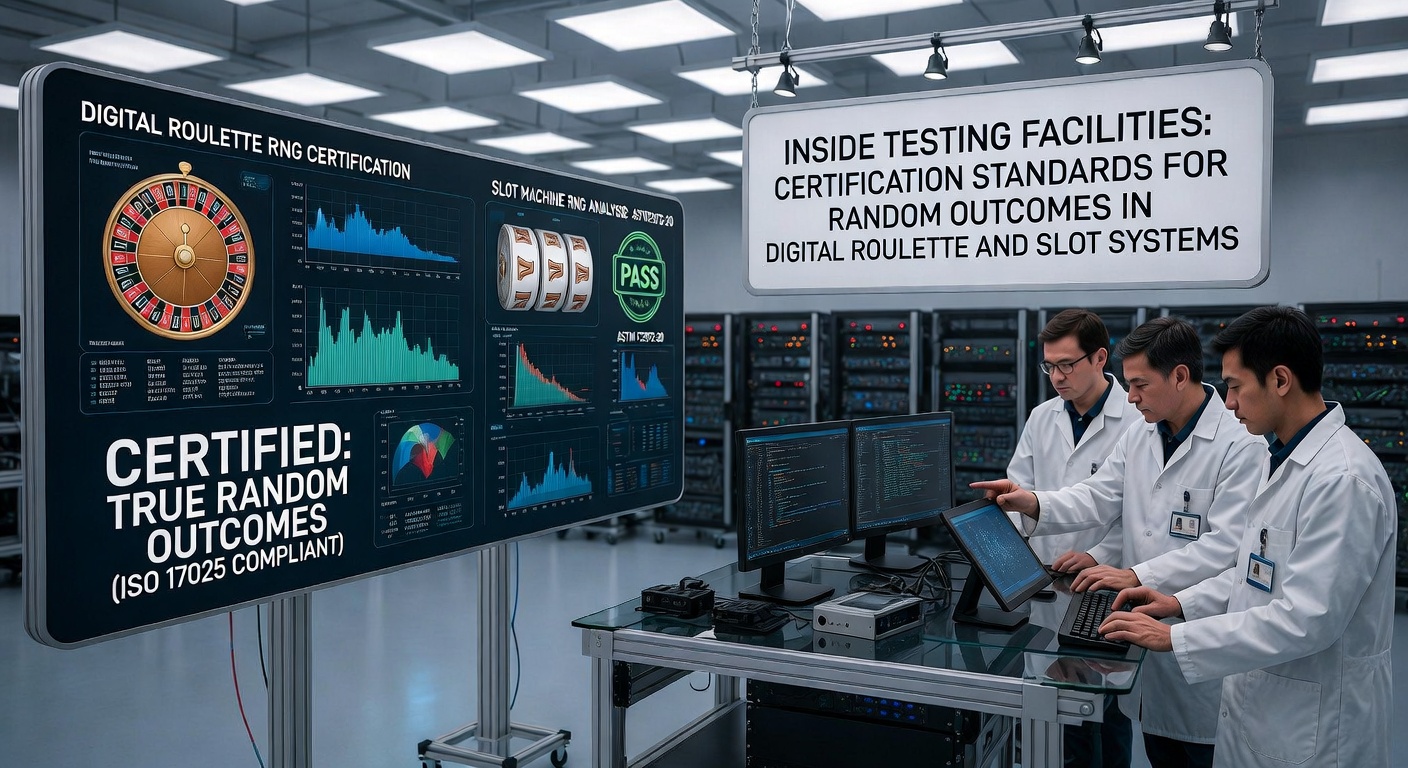
Testing facilities operate as specialized environments where engineers apply rigorous statistical protocols to confirm that digital roulette wheels and slot reels generate outcomes free from predictable patterns. These centers evaluate random number generators through sequences of tests that measure uniformity, independence, and unpredictability across millions of simulated spins. Certification follows established benchmarks that gaming authorities require before systems reach commercial deployment. Facilities begin evaluations by isolating the RNG core from game software interfaces, then subject it to battery assessments including the Diehard suite and NIST statistical test collections. Technicians record output distributions and compare them against theoretical expectations using chi-square analysis alongside runs testing to detect any clustering or repetition. When deviations exceed predefined thresholds, developers must adjust algorithms before resubmission.Core Testing Protocols Applied to Roulette and Slots
Digital roulette simulations undergo cycle length verification to ensure wheel positions do not repeat within operational timeframes, while slot systems receive additional scrutiny on reel strip mapping and bonus trigger frequencies. Observers note that both game types share common RNG validation steps yet diverge in payout distribution modeling because roulette maintains fixed probabilities across 37 or 38 positions whereas slots incorporate weighted symbols that influence jackpot probabilities. Data from multiple labs shows that certification cycles typically span four to six weeks when initial submissions pass all primary statistical hurdles without requiring code revisions.
Accreditation Frameworks and Laboratory Requirements
Independent laboratories maintain ISO/IEC 17025 accreditation which mandates documented procedures for equipment calibration, personnel training, and result traceability. Regulatory bodies across regions such as the Nevada Gaming Control Board and the Malta Gaming Authority accept reports only from facilities holding these credentials. As of May 2026 several jurisdictions have aligned their RNG submission templates to include expanded entropy source documentation following updates to international gaming technology guidelines. Researchers have documented how these harmonized formats reduce review times by approximately 15 percent across cross-border applications.
Statistical Methods and Failure Thresholds
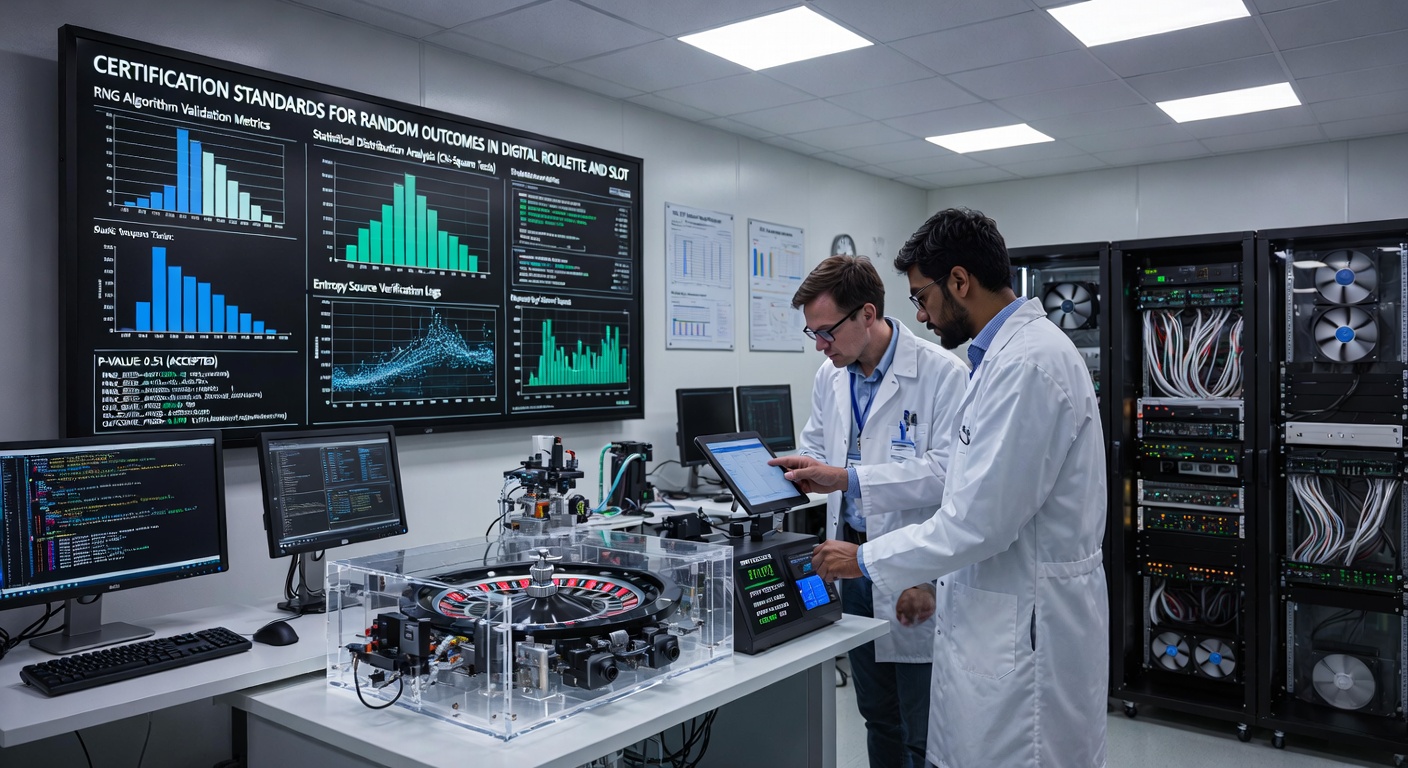
Engineers apply serial correlation tests to confirm successive outcomes remain independent, then conduct poker tests and frequency tests on binary sequences extracted from RNG streams. Thresholds for acceptance typically require p-values between 0.01 and 0.99 to avoid both excessive uniformity and detectable bias. When a slot game incorporates progressive jackpot mechanics, additional modeling verifies that contribution rates and trigger events align with disclosed return-to-player percentages over extended play volumes exceeding 100 million spins.
Hardware Versus Software RNG Distinctions
Physical random sources such as thermal noise chips undergo environmental stress testing at temperature extremes and voltage fluctuations to verify stability under casino floor conditions. Software-based generators relying on cryptographic hash functions receive separate scrutiny for seed generation quality and resistance to state reconstruction attacks. Industry reports from organizations including the Nevada Gaming Control Board indicate that hybrid systems combining both approaches have increased in submissions since 2024 because they balance speed with verifiable entropy collection.
Documentation and Ongoing Compliance Monitoring
Once certified, systems enter periodic re-evaluation schedules that require fresh statistical samples collected from live environments. Auditors compare these samples against original certification baselines to detect any drift introduced through software updates or hardware aging. Gaming associations publish annual summaries showing that fewer than 3 percent of retested titles fail to maintain compliance, usually due to post-certification modifications rather than initial RNG flaws.
Conclusion
Certification standards continue to evolve alongside advances in computational capability and regulatory expectations. Testing facilities serve as gatekeepers that translate complex mathematical requirements into documented approvals accepted by operators and oversight agencies worldwide. Continued refinement of test batteries and accreditation criteria supports consistent fairness verification across digital roulette and slot deployments.